
Buy Ubiquinol Now

Most of us have a hard time getting enough movement throughout the day. From working at a desk to evening couch time, most adults spend more than half of their day sitting. But changing that reality is easier than you might think. Incorporating small amounts of movement throughout your day can support heart health, muscular strength, and overall wellness.
Before you start paying for a gym membership or buy workout equipment, here’s the truth about moving your body: you can do a number of easy exercises with minimal or no equipment, and you don’t need more than five minutes for some activities. Here are 14 simple ways to fit exercise into your busy day, from 5-minute yoga poses to walking work meetings — no matter how packed your schedule is.
Read More: Explore More Tips for Building an Active Lifestyle
Why Short Workouts Still Support Overall Wellness
There’s no doubt that regular exercise at the gym, through a training program, or as a part of your routine has benefits for your well-being. But don’t overlook the power of small movements throughout the day while you’re brushing your teeth, working, cooking, or watching your favorite TV show.
Research shows that breaking up sedentary time with activity supports general wellness. Even small doses of exercise add up: three 10-minute sessions throughout the day mean one 30-minute workout.
Small movements might not feel like a “workout,” but they have a number of physical and mental benefits, like:
- Supports stress management and mental clarity
- Supports muscle health and bone density
- May contribute to better sleep quality
- Helps maintain a healthy weight
- Promotes mitochondrial function at the cellular level
- Supports overall mood and wellness
Beyond that, if you start working 5- or 10-minute sessions into your day-to-day, you might not even realize how easy it is to move your body. Over time, the body, brain, and even your cells will thank you.
Read More: Discover the Role of Mitochondria for a Healthy Lifestyle
Quick Guide: 14 Ways to Fit Exercise Into Your Day
You don’t need a gym membership, personal trainer, or ample time on your hands to do these accessible movements. Here’s your quick guide to the movements we’ll cover and how you can work them into your day.
| Exercise Type | Minimum Time Needed | Where You Can Do It | Primary Benefit |
|---|---|---|---|
| Yoga Poses | 5 minutes | Home, office | Balance and strength |
| Stretches (all types) | 5–10 minutes | Desk, home, anywhere | Flexibility and mobility |
| Standing Pilates | 5–10 minutes | Home, office | Core strength and balance |
| Walking Routine | 15 minutes | Anywhere | Cardiovascular health |
| Daily Walking | 30 minutes | Outdoors, indoors | Full-body fitness |
| Standing Push-ups | 5 minutes | Home, kitchen | Upper body strength |
| Stair Climbing | 5–10 minutes | Home, work | Leg strength, cardio |
| Plié Squats | 5 minutes | Anywhere | Lower body strength |
| Jump Rope | 10 minutes | Home, outdoors | Cardio and coordination |
| Cardio-Strength Circuit | 10 minutes | Home | Full-body strength |
| Walking Meetings | Ongoing | Work, outdoors | Active work time |
| Exercise Ball Sitting | Ongoing | Desk | Core engagement |
| Pool Exercise | 20–30 minutes | Pool | Low-impact cardio |
| Heel Raises | 2–3 minutes | Anywhere | Balance and ankle strength |
The best part about these movements is that you can choose your activity based on where you are, how much time you have, and what your exercise goals are.
5-Minute Exercises You Can Do Anywhere
Yoga for Balance and Strength
Yoga is one of the oldest practices, and for good reason. Just five minutes of yoga can improve balance and strength. Try these poses and hold each for five seconds, repeating five times: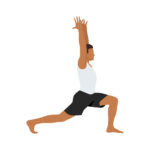
- Warrior One: Start standing with your feet together, then step one leg back into a lunge. Bend your front leg while keeping your back leg straight. Press your back heel down. Face forward and lift your torso up as you stretch your arms above your head.
 Warrior Two: Start standing with your feet together, then step one leg back into a lunge. Bend your front leg while keeping your back leg straight. Press your back heel down and turn your back foot to a 45-degree angle. Face sideways and, while keeping your abs tight, lift your torso up, extend each arm to shoulder height, and look out over your front hand. Keep your palms open.
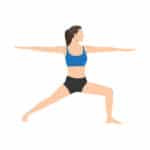 Warrior Two: Start standing with your feet together, then step one leg back into a lunge. Bend your front leg while keeping your back leg straight. Press your back heel down and turn your back foot to a 45-degree angle. Face sideways and, while keeping your abs tight, lift your torso up, extend each arm to shoulder height, and look out over your front hand. Keep your palms open.
- Chair Pose: Stand with your feet hip-width apart. Raise your arms overhead, palms facing each other. Exhale and sit back, as if into a chair. Keep your weight over your ankles as your chest moves forward.
Remember: you can do these at home, at an office, at the airport — really anywhere you have the space. Focus on breathing and form over speed, as the flow between movements matters, too.
Read More: Ready for More Yoga Poses? Check Out These 11
Quick Stretches for Flexibility
Not all movement has to be focused on building strength. Stretching is just as important for wellness and longevity. A few minutes of stretching at your desk, at home, or on the go can increase flexibility and reduce stiffness.
Here are a few 5-minute stretches you can do seated:
- Shoulder reach: Increase your shoulder flexibility by reaching one hand behind your head to the center of your upper back. With the other hand, reach behind and try to touch your opposite fingers. Hold for five seconds and switch. Tip: If you have difficulty touching your fingertips together, hold a sock or a rolled newspaper in your top hand, and grab one end of it with your lower hand.
- Chair twist: Stretch your lower back by turning your torso while sitting in a chair. Grab one side of the chair with both hands. Take a deep breath as you look over your shoulder. Twist as far as you comfortably can, then repeat on the other side
- Seated swan: Sit tall in your chair with your feet flat on the floor, then place your hands on your thighs and gently arch your back while lifting your chest toward the ceiling. Hold for 5–10 seconds, breathing deeply, then slowly return to a neutral spine position.
- Shoulder shrug and roll: Sit or stand comfortably, then raise both shoulders up toward your ears, hold for a moment, and slowly roll them back and down in a circular motion. Repeat 5–10 times to release tension in your neck, shoulders, and upper back.
- Figure-four stretch: Sit in a chair with your feet flat on the floor, then cross one ankle over the opposite knee so your leg forms a “4” shape. Gently press down on the raised knee and lean slightly forward until you feel a stretch in your hip and glute, holding for 20–30 seconds before switching sides.
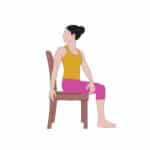 Chair twist: Stretch your lower back by turning your torso while sitting in a chair. Grab one side of the chair with both hands. Take a deep breath as you look over your shoulder. Twist as far as you comfortably can, then repeat on the other side
Here are a few 5-minute stretches you can do standing: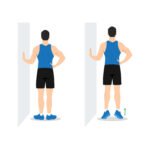
- Standing calf raise and stretch: Stand behind a chair and hold the back for balance, then rise up onto your toes, hold for a moment, and slowly lower back down. Repeat 10 times to strengthen and stretch your calves, ankles, and lower legs.
- Standing chest opener: Stand tall with your feet hip-width apart, then clasp your hands behind your back and gently straighten your arms while lifting your chest toward the ceiling. Hold for 15–20 seconds to release tightness in your chest and shoulders.
- Standing quad stretch: Stand near a wall or chair for support, then bend one knee and bring your heel toward your glute, holding your ankle with the same-side hand. Keep your knees together and stand tall, holding the stretch for 20–30 seconds before switching legs.
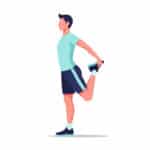 Standing quad stretch: Stand near a wall or chair for support, then bend one knee and bring your heel toward your glute, holding your ankle with the same-side hand. Keep your knees together and stand tall, holding the stretch for 20–30 seconds before switching legs.
Stretching can work wonders for your mobility and allow you to continue doing the activities you love. During your next lunch break, commercial break, or airport downtime, try one of these for five or 10 minutes and reap their benefits.
Read More: Learn Why Stretching Matters for Longevity
Standing Pilates Moves for Quick Toning
Pilates is a great workout for strength, toning, and balance work, and you can do Pilates exercises from your living room — no equipment required.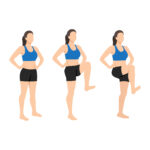
- Knee lift: With your hips level, bring your right leg up and balance. Hold for 10 seconds and repeat on the other side.
- Roll down: Bring your chin to your chest, then slowly bend down toward your toes, rolling one vertebra at a time. Slightly bend your knees and slowly roll back up. Repeat four times.
- Footwork: With your feet parallel, rise up on the balls of your feet. Stretch your heels down to the floor and up again. Repeat several times.
You can knock these movements out in a hotel room, waiting for your flight, before another workout, and more. To get the most out of these movements, do one for a few minutes, then repeat several times.
Plié Squats You Can Do While Multitasking
Another easy 5-minute multitasking move you can do is plié squats while you’re talking on the phone, watching TV, or even cooking.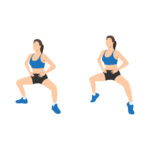
For plié squats, stand with your heels in a V-position together and toes apart. Tuck your hips in and lower your body down until your knees are just in front of your toes. Squeeze your inner thighs as you rise up. Do 20 repetitions.
This movement works the inner thighs and glutes, supports functional strength for everyday activities, and is the perfect way to make the most of “waiting time.”
Heel Raises for Balance
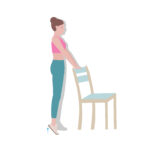
Heel raises are a simple way to build ankle strength and balance while brushing your teeth, watching TV, or cooking. Stand on one leg and raise your heel off the floor, and hold for 10 seconds. Do 10 repetitions and repeat on the other leg.
Workout Routines When You Have 10–15 Minutes
Walking, Strength, and Stretching Routine
If you have 10 or 15 minutes in your day, focus on incorporating a little cardio, strength, and flexibility with these exercises. This three-step routine can be a great calorie burner and requires minimal time and space:
- Walk or climb stairs for 7–10 minutes.
- Chair-sit by standing up and sitting back down into your chair (use your armrest to help you stand up and sit down if you need it). Do 12–15 repetitions.
- Stretch by holding onto a table or desktop for support and bend at the hips, pushing your buttocks back toward the wall behind you. Hold for 10 seconds.
If you don’t have access to chairs or stairs, even going for a quick 15-minute walk between meetings or at your doctor’s office can improve your overall wellness routine. All you need is a pair of shoes that you can walk a reasonable distance in.
Read More: Try Our Walking Plan for Beginners
Jump Rope Cardio Workout
Just 10 minutes of jump rope supports cardiovascular health, balance, and coordination. If you have a jump rope, try this short routine:
- Minute 1: Jump in place to warm up (no rope).
- Minutes 2–4: Jump with a slight bounce between each rope jump.
- Minutes 5–7: Alternate feet (as if you were running in place).
- Minutes 7–8: Slalom jump (keeping feet together, jump a few inches to the right and then to the left as if jumping moguls).
- Minutes 9–10: Jump in place to cool down (no rope).
You might be amazed at how consistently doing this jump rope circuit supports cardiovascular endurance over time.
Cardio and Strength Circuit
Combining cardio and strength is essential to promoting physical wellness, and there are many routines that incorporate both. While the gym is a great place to get some cardio and strength work in the same space, it is not required. Plus, you don’t always need weights to build strength.
Next time you have 10–15 minutes, try this cardio-strength circuit, doing each exercise for two minutes:
- Step up onto a stair or sturdy platform, and then step back to the floor. Repeat.
- Stand with your back against the wall. Slide slowly down the wall until your knees are bent and thighs are parallel to the floor. Hold 30 seconds, then stand up and repeat.
- Step up onto a stair or sturdy platform, and then step back to the floor. Repeat.
- Get down on all fours. Place your hands shoulder-width apart, back straight, and knees on the floor. Lower your chest to the ground, push up, and repeat.
- Step up onto a stair or sturdy platform, and then step back to the floor. Repeat.
You can modify this routine based on your fitness level. It supports strength, balance, and mobility, and all you need are stairs and a sturdy platform. If you’re ready to explore strength movements that use dumbbells, you can get started with our Weightlifting for Beginners, Part 1.
Read More: Try Our Low and High Impact Cardio Routines
Exercises You Can Do at Home
Standing Push-ups Using Your Kitchen Counter
Did you know you can strengthen your chest and triceps without pushups? All you need are at-home items like a kitchen counter or sturdy surface.
For a chest and tricep workout, stand a little more than arm’s length from a kitchen counter or sturdy surface and place your hands on the edge of the countertop, shoulder-width apart. Bend your elbows and lower your torso, then extend your arms by pushing up and away from the countertop. Keep your body straight from head to heels.
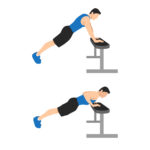 Doing this routine for two sets of 10 repetitions can make a thorough 15-minute workout. Be sure to keep your body straight from head to heels. These are easier and more accessible than traditional floor pushups, but they still provide the same strength and mobility benefits.
Read More: Try Our At-Home Alternatives for Weight Workouts
Daily Walking for Full-Body Fitness
You can think of walking like the gold standard for fitness: it’s safe, accessible, and effective for cardiovascular health. It uses over 200 muscles and can be done anywhere, anytime. Setting aside just 30 minutes to walk each day can provide significant health benefits. Here’s a simple routine to get you started:
- Start with a 3–5 minute warm-up at a leisurely pace
- Increase your speed to a brisk pace
- If you haven’t been active lately, start by walking 10–15 minutes and add 2–3 minutes onto the session each week
- End each session with a 3–5 minute cool-down of slow walking
Maximize Your Stair Climbing
Climbing stairs isn’t just for getting from one floor to the next: it can be an effective cardio and leg workout by adjusting your speed and intensity. Instead of walking casually up the stairs, try increasing your speed and the number of stairs you can walk in 1 minute. Take two steps at once if you can do it safely, then track your steps for a single session to level up your progress over time.
The best news is you can do this anywhere with stairs, whether you’re at home, work, the doctor’s office, the mall, or somewhere else. Incorporating 15 to 20 minutes of stairs into your daily routine can make a big difference for your muscular and cardiovascular health. So next time, opt for the stairs rather than the elevator and make the most of each step.
Exercises You Can Do at Work
Walking Meetings and Phone Calls
Walking is great for you, but your walking time doesn’t always have to be just walking time. Taking work calls or meetings during your walk can help you get all the cardiovascular benefits of walking while also being productive. Just 20 to 30 minutes of walking a day can help you break up sedentary time, and all you need are your walking shoes, your device, and a pair of headphones to start walking inside or outside.
Tone Your Core with an Exercise Ball
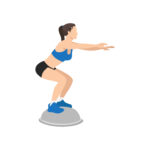 You might not realize that sitting can be a workout in itself — on an exercise ball. Replace your desk chair with an exercise ball to engage your core throughout the day.
Sitting on an exercise ball helps with core engagement, posture alignment, and multiple muscle groups. When on the ball, your body constantly makes small adjustments to your posture and works your back, abdominal, glute, and leg muscles.
The best part? You don’t need to carve out any extra time commitment for this exercise. If you really want to challenge yourself, try standing or even squatting on the ball while you watch TV or listen to a meeting.
Low-Impact Exercise for Joint-Friendly Fitness
Pool Exercises for Full-Body Movement
If you have access to a gym or communal pool, exercises in water offer low-impact, joint-friendly cardio that uses the body’s natural resistance. Being submerged in water naturally lifts the body up, taking stress off the joints and allowing you to move freely while making the most of the water’s natural resistance. Try these pool movements:
- Walk or jog across the pool
- Do a knee lift
- Do jumping jacks
- If you don’t know how to swim, use a flotation device in shallow water
Water exercises are ideal for those with joint issues, and they can provide full-body workouts with little to no equipment.
Read More: Discover the Power of Water Aerobics
Supporting Your Active Lifestyle with Kaneka Ubiquinol®
Physical activity of any kind increases the body’s cellular energy demands. While this is a normal part of movement, supporting your cellular needs with smart supplementation is key to a healthy lifestyle.
Kaneka Ubiquinol® is the active antioxidant of CoQ10 and can be a great addition to an active lifestyle. This daily supplement supports mitochondrial function, cellular energy production, and general wellness, so you can promote your cellular health while incorporating regular movement into your day.
Read More: Learn How Kaneka Ubiquinol® Fits Into Your Active Lifestyle
Building an Active Lifestyle, One Small Step at a Time
Fitting in regular movement every day is easier than you might think when you multitask, get creative, and think of those extra few minutes as an opportunity. You don’t need to pay for a gym membership or reset your entire lifestyle. Incorporating small bursts of movement into your day is key to supporting cardiovascular, muscular, physical, and mental health.
If you’re not sure how to get started, don’t stress. Start with one or two exercises from this list and build from there. You can mix and match movements to reduce boredom and try new activities — you might surprise yourself.
The best exercise routine is one you’ll actually stick with, so choose activities you enjoy, and remember that 5 to 10 minutes can make a world of difference for healthy aging and long-term wellness. Plus, daily supplements like Kaneka Ubiquinol® will be with you every step of the way during your movement journey.
Read More: Discover More Healthy Aging Strategies